
Built for a Family Leaving the Neighborhood for the First Time
The neighborhood was never zoned for this kind of activity. That means most students arriving from these blocks have never trained in martial arts before, and the program is built around that fact instead of assuming otherwise. A child coming home from Vero Beach Elementary School is met with games and short movement drills in Pre-K karate. There is no lecture on stance or terminology on day one. The class builds listening skills and coordination first, before technique enters the picture at all. Standing still in a line. Waiting a turn. Following a direction the first time it is given. These small habits get practiced here long before they show up anywhere else. Older students move into youth martial arts at a pace built for a true first-timer, not someone catching up to a class already in motion, the same approach carries through every one of our karate classes. Every rank taught at this dojo, from a child's first day to AAU competition, has been overseen personally by Sensei Dave Roth, a seventh-degree Shorin-Ryu black belt who also holds rank in jujitsu, Kobudo, and Arnis.
Most addresses here are a short walk or a five-minute drive from the dojo. That is closer than the trip many families already make out to Pocahontas Park for an afternoon at the playground, or the drive toward US-1 for groceries and errands. Distance was never really the problem for a family on these blocks. Not having a beginner-friendly program to walk or drive to at all was.
What Makes This a Fit for a Family Leaving the Neighborhood to Try Something New:

A Pre-K class built for ages three to five specifically, not a general kids class simply opened to younger children.
-
Youth martial arts with no assumed background, since the neighborhood itself has never had a local martial arts option.
-
Family martial arts open to a parent, so the trip out of the neighborhood becomes a shared activity instead of a drop-off.
-
Martial arts camp coverage during school breaks, for a neighborhood with no activity center of its own.
Six Ways to Start, From a Toddler to a Parent
These karate classes and family programs are organized by age and experience. No student is placed into a single one-size-fits-all class.
-
Pre-K Karate Ages 3 to 5. Pre-K karate relies on play and short bursts of movement. Sitting still for instruction is not realistic at this age.
-
Youth Martial Arts Ages 6 to 12. Youth martial arts introduces striking and grappling together. Real attention is paid to staying calm under pressure.
-
Family Martial Arts Through family martial arts, a parent trains the same material as the child in the room. Nobody sits and watches from a chair.
-
Karate and Jujitsu Striking fundamentals from Shorin-Ryu are taught alongside the grappling half of the curriculum, Niseido jujitsu. The two are developed together, not one after the other.
-
Weapons and Arnis Once striking basics are in place, training expands into bo staff and sai work through Kobudo, along with Filipino Arnis stick and blade movement.
-
AAU Karate Team Open to students ready to move past belt testing and into actual competition.
What Gets Built Alongside the Belt
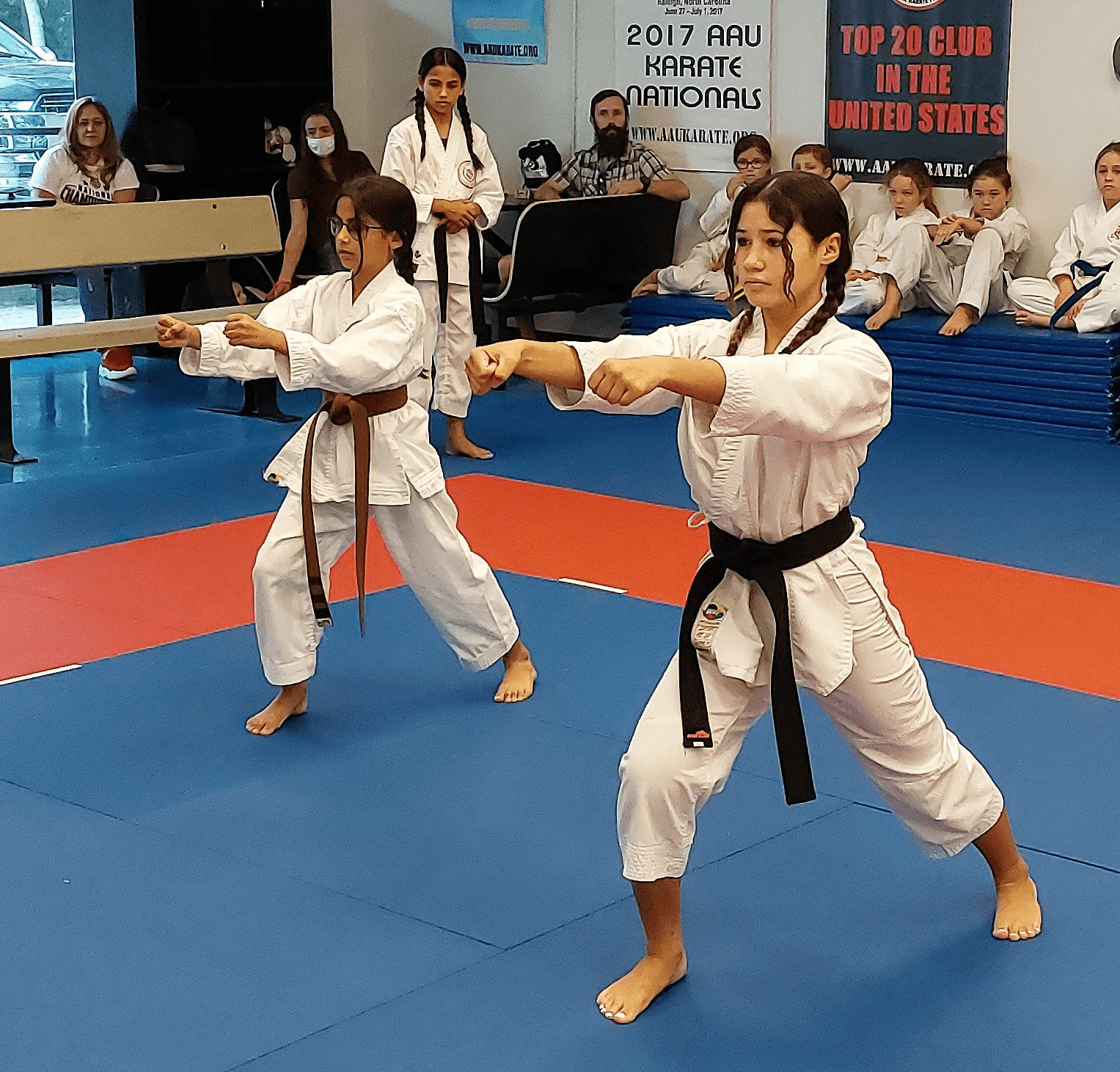
Think about how a century-old bungalow in this historic neighborhood gets restored. Nobody strips the whole house down in one weekend. A family fixes one window, then one floorboard, then one wall. The house holds together better with each small repair. Confidence in a martial arts class comes together the same way. A quiet child does not become outgoing overnight. Small wins add up first: a kata remembered correctly, a belt test passed, a partner drill done without hesitation. It is built through repetition, not a single pep talk. Discipline shows up first in small, unremarkable ways: standing in formation, waiting a turn, following an instruction on the first try. A teacher at Vero Beach Elementary would recognize this behavior right away. Focus is treated as something to build through practice, not a trait a child either has or does not have. Taken together, confidence, discipline, and focus are the real substance of child development in a martial arts class, not just words on a brochure. That is part of why a Pre-K class and a youth class share almost nothing in structure. Parents who train through family martial arts often notice the same carryover within a few weeks, usually during homework time or a simple request to sit still at dinner.
Why Local Families Choose This Program
-
The Pre-K curriculum exists as its own class, not a version of an older kids' class simply scaled down.
-
Sensei Dave Roth has personally overseen every rank, from a child's first day to AAU competitor, since the dojo opened in 1994.
-
Family martial arts turns a trip out of the neighborhood into a shared activity instead of two separate errands.
-
A student who starts in karate can move into weapons, jujitsu, or Arnis without ever needing to enroll somewhere new.
From First Call to First Belt
-
Send word ahead. A phone call, an email, or the contact form works to lock in a first session for a child or a parent.
-
Show up once, decide later. Nobody has to commit before trying Pre-K karate, youth martial arts, or the family program firsthand.
-
Handle the logistics. A uniform gets measured, and a class slot gets chosen around whatever schedule fits.
-
Settle into training. Ongoing classes follow the same curriculum every student works through, building toward a first belt.
Areas We Serve
Students from Osceola Park train with families from Vero Beach, Indian River County, Sebastian, Indian River Shores, North Beach, South Beach, Beachland, Vero Beach South, and West Vero Corridor. Flexible evening and Saturday martial arts classes make it convenient for families across these nearby communities to train on a schedule that fits their week.