
Built for Someone Who Has Never Tried a Class Before
Because no local option has ever existed on this side of the bridge, most students arriving from North Beach have zero prior martial arts experience, and the program is shaped around that reality rather than assuming otherwise. A young child fresh off a school day at Beachland Elementary or Saint Edward's School is met with games and short movement drills in Pre-K karate, not a lecture on stance and technique, the kind that build listening skills, coordination, and respect before a child ever holds a stance. Following directions the first time they are given, waiting a turn, standing still in line, these small habits are practiced here long before they show up anywhere else. Older students move through youth martial arts at a pace built for a true first timer. Every one of these classes has been taught personally, since 1994, by Sensei Dave Roth, a seventh degree Shorin Ryu black belt who also holds rank in jujitsu, Kobudo, and Arnis.
The Merrill P. Barber Bridge puts most island addresses within roughly ten to twenty minutes of the dojo, closer than the drive many families already make for the Village Shops on A1A or the nearest grocery store on the mainland. One bridge crossing away was never really the problem here. Not having a program built for a total beginner, one that also builds school readiness habits a child carries straight into the classroom, was.
What Makes This a Fit for a First Timer

A Pre-K class built for ages three to five specifically, rather than a general kids class stretched down to younger students.
-
Youth martial arts with no assumed background, which matches an area where trying a class has never been possible without leaving.
-
Family martial arts open to a parent or a visiting grandparent, useful during the season when the island's population grows.
-
Evening and Saturday class times, since families here are already used to timing errands and school runs around the bridge.
Six Ways to Start, From a Toddler to a Grandparent
These programs are organized by age and experience rather than a single one size fits all class. See the full programs list for details on each.
-
Pre-K Karate, Ages 3 to 5. Pre-K karate leans on play and short bursts of movement, since sitting still for instruction is not realistic at this age.
-
Youth Martial Arts, Ages 6 to 12. Youth martial arts introduces striking and grappling together, with attention paid to staying level headed under pressure.
-
Family Martial Arts. Through family martial arts, an adult, whether a parent or a grandparent visiting for the season, trains the same material as the child in the room.
-
Karate and Jujitsu. Striking fundamentals from Shorin Ryu sit next to the grappling half of the curriculum, Niseido jujitsu, developed together rather than in sequence.
-
Weapons and Arnis. Once a student has striking basics down, training opens up into bo staff and sai work through Kobudo, alongside Filipino Arnis stick and blade movement.
-
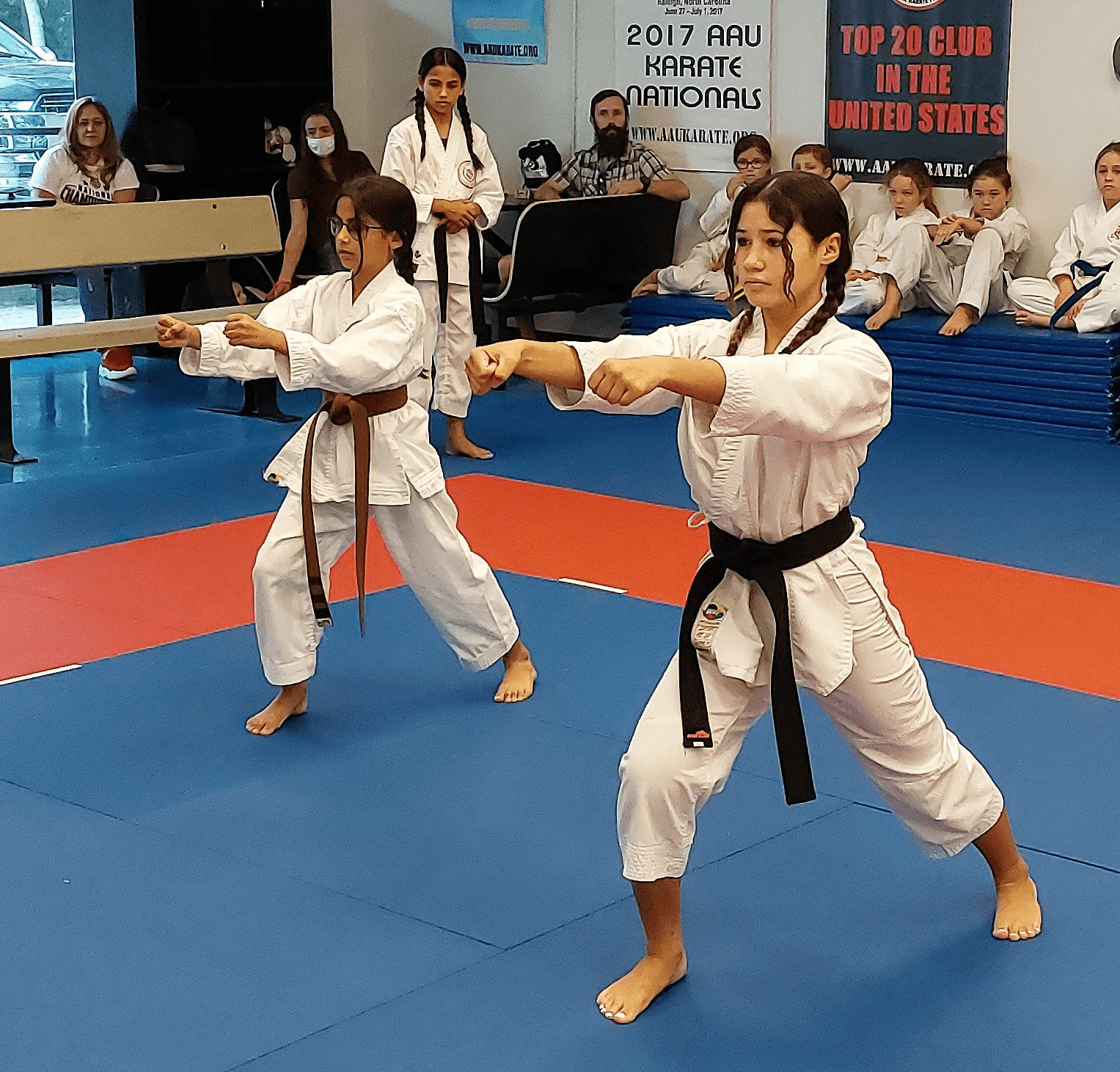
AAU Karate Team. Open to students ready to move past belt testing and into actual competition.
What Gets Built Alongside the Belt
A lifeguard at Jaycee Park does not explain balance to a child learning to swim past the sandbar. The child works at it, gets it wrong a few times, and eventually gets it right. Confidence in a martial arts class works the same way, earned through repetition rather than reassurance. Discipline shows up first in small, almost boring ways, standing in formation, waiting a turn, following an instruction on the first try, the kind of behavior a teacher at Beachland Elementary would recognize instantly. Focus is treated as a skill to build, not a trait a child either has or lacks, and that view of child development shapes why a Pre-K class and a youth class share almost nothing in structure. A grandparent training through family martial arts during a winter visit often notices the same carryover effect within a few weeks, at the dinner table or during a simple request to sit still.
Why an Island Family Chooses This Program
-
The Pre-K curriculum exists as its own class, not a scaled down version of something built for older kids.
-
Sensei Dave Roth has personally overseen every rank, from first day beginner to AAU competitor, since the dojo opened in 1994.
-
Seasonal and short term arrangements are built into the schedule, since the island's own population shifts by the season.
-
A student who starts in karate can move into weapons, jujitsu, or Arnis without ever needing to enroll somewhere new.
From First Call to First Belt
-
Send word ahead. A phone call, an email, or the contact form works to lock in a first session for a child, an adult, or a visiting grandchild.
-
Show up once, decide later. Nobody has to commit before trying Pre-K karate, youth martial arts, or the family program firsthand.
-
Handle the logistics. A uniform gets measured, and a schedule slot is chosen with whatever timeframe fits, seasonal stay included.
-
Settle into training. Ongoing classes follow the same curriculum every student works through, building toward a first belt.
Areas We Serve
Students from North Beach train alongside families from Vero Beach, Indian River County, Sebastian, Indian River Shores, South Beach, Osceola Park, Beachland, Vero Beach South, and West Vero Corridor. Convenient evening and Saturday martial arts classes make it easy for families throughout the area to train on a schedule that fits their routine.