
Built Around a Drive Families Already Make
Most of the storefronts along Beachland Boulevard are restaurants, real estate offices, and boutique shops, not youth activity centers. With a Walk Score of about 20, there is also no way for a child here to simply walk to a friend's house or a practice; every bit of physical activity and peer interaction outside of school already depends on a parent driving somewhere. A family here already drives off the island for lessons, practices, and appointments as a normal part of the week, not as a rare exception. Two bridges make that drive short and familiar: State Road 60 and the 17th Street crossing, about 1.4 miles apart. A child who attends Beachland Elementary, an A-rated, Gold STEAM-designated school, is already used to a structured school day. Pre-K karate carries a similar structure into an after-school setting, but through games and short movement drills rather than a desk and a worksheet. There is no lecture on stance or terminology on day one. Older students move into youth martial arts at a pace built for a true first-timer, not someone catching up, the same approach carries through every one of our karate classes. Every rank taught at this dojo, from a child's first day to AAU competition, has been overseen personally by Sensei Dave Roth, a seventh-degree Shorin-Ryu black belt who also holds rank in jujitsu, Kobudo, and Arnis.
What Makes This a Fit for a Family Already Used to Driving for Activities:

A Pre-K class built for ages three to five specifically, not a general kids class simply opened to younger children.
-
Youth martial arts with no assumed background, for a student stepping into a new activity rather than continuing one.
-
Family martial arts open to a parent, so the drive across the bridge becomes a shared activity instead of a solo drop-off.
-
Martial arts camp coverage during school breaks, useful for a family already coordinating drives to and from the island.
Six Ways to Start, From a Toddler to a Parent
These karate classes and family programs are organized by age and experience. No student is placed into a single one-size-fits-all class.
-
Pre-K Karate Ages 3 to 5. Pre-K karate relies on play and short bursts of movement. Sitting still for instruction is not realistic at this age.
-
Youth Martial Arts Ages 6 to 12. Youth martial arts introduces striking and grappling together. Real attention is paid to staying calm under pressure.
-
Family Martial Arts Through family martial arts, a parent trains the same material as the child in the room. Nobody sits and watches from a chair.
-
Karate and Jujitsu Striking fundamentals from Shorin-Ryu are taught alongside the grappling half of the curriculum, Niseido jujitsu. The two are developed together, not one after the other.
-
Weapons and Arnis Once striking basics are in place, training expands into bo staff and sai work through Kobudo, along with Filipino Arnis stick and blade movement.
-
AAU Karate Team Open to students ready to move past belt testing and into actual competition.
What Gets Built Alongside the Belt
The Ocean Grill has kept the same booths, the same oceanfront view, and the same reputation for more than eighty years. That kind of staying power is not built in a single good night. It comes from doing the same things well, over and over, until people trust it without thinking twice. Confidence in a martial arts class comes together the same way, one small success layered on the last until it holds. A first-time student does not walk in already sure of themselves. What actually changes is more specific than that: a stance held a few seconds longer, a kata run through without stopping to think, a first sparring round finished instead of avoided. None of that happens in one class. Waiting a turn without complaining, standing at attention instead of fidgeting, repeating a drill without being asked twice: these are the plain, unglamorous units discipline is actually made of, not a slogan on a wall. Beachland Elementary already asks its students to live by the Three B's, Be Respectful, Be Responsible, Be Safe, so a child arriving from that school walks into a dojo that expects roughly the same things, just said differently. Focus gets treated the same way as any physical skill, something a student improves at through repetition, not something they either have or lack from birth. Put plainly, this is what child development looks like inside a martial arts class, measured in small repeated moments rather than described in one sentence on a brochure. Parents training through family martial arts usually notice it first outside the dojo, often at homework time or during a request to sit still through dinner.
Why Local Families Choose This Program
-
Pre-K karate stands as its own class built for ages three to five, not a younger cut of a curriculum designed for older kids.
-
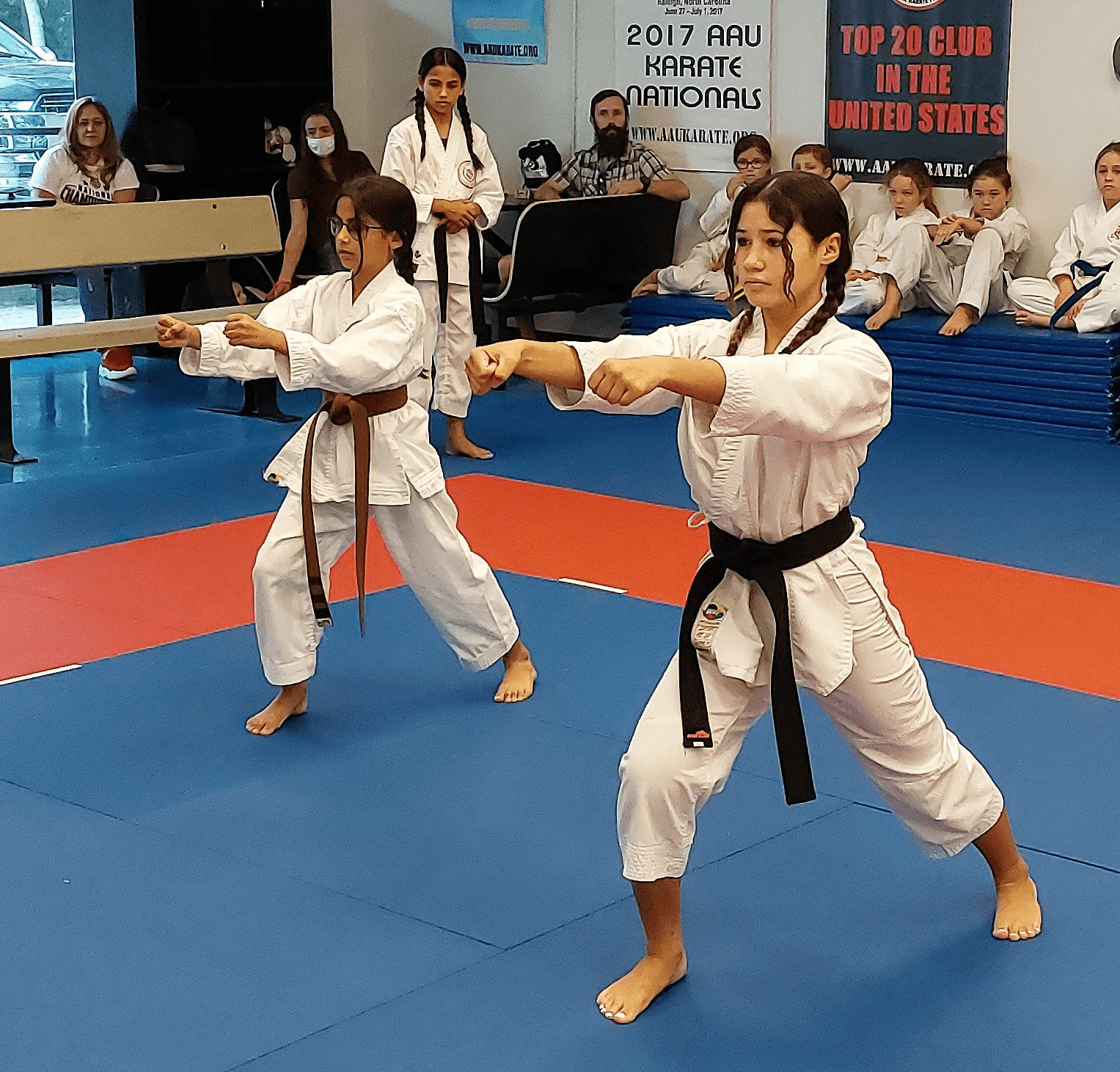
Every rank taught here, from a first belt to AAU competition, has gone through Sensei Dave Roth personally since 1994.
-
The bridge crossing turns into a shared family activity through family martial arts, rather than a solo drop-off.
-
Karate, jujitsu, weapons, and Arnis all live under one roof, so a student can keep progressing without ever switching schools.
From First Call to First Belt
-
Send word ahead. A phone call, an email, or the contact form works to lock in a first session for a child or a parent.
-
Show up once, decide later. Nobody has to commit before trying Pre-K karate, youth martial arts, or the family program firsthand.
-
Handle the logistics. A uniform gets measured, and a class slot gets chosen around whatever schedule fits.
-
Settle into training. Ongoing classes follow the same curriculum every student works through, building toward a first belt.
Areas We Serve
Families from Beachland train alongside students from Vero Beach, Indian River County, Sebastian, Indian River Shores, North Beach, South Beach, Osceola Park, Vero Beach South, and West Vero Corridor. With convenient evening and Saturday martial arts classes, families from across these nearby communities can find a training schedule that works for them.