Beginner Karate Classes Built for a First-Timer
Most children walking into a martial arts class for the first time have never held a stance or bowed to an instructor, and this program is built with exactly that in mind. Pre-K karate breaks everything into short games rather than long drills, since a three or four year old from Pelican Island Elementary is not going to sit through a lecture on technique. Youth martial arts moves at a pace that assumes no prior experience, whether a student is coming from Sebastian Elementary, Treasure Coast Elementary, or anywhere else in town. As a karate school built around martial arts for beginners, every class here starts from zero and never assumes a child has trained before. Sensei Dave Roth, who holds a 7th-degree black belt in Shorin-Ryu karate along with rank in jujitsu, Kobudo, and Arnis, has taught every one of these beginner classes personally since the dojo opened in 1994.
Many Sebastian families choose Florida Karate Academy because of its beginner-friendly programs, dedicated Pre-K karate classes, and family martial arts training that welcomes students with no previous experience.close to a twenty-minute drive, a route many local families already take for shopping or errands near Vero Beach.
Why This Works for a First-Time Student:

Pre-K karate for ages three to five, kept short and game-based since young attention spans need it that way.
-
No experience required for youth martial arts, so a child starting after their friends have already begun still catches up quickly.
-
Evening classes on weekdays and a Saturday morning slot that fit around school pickup at Pelican Island, Sebastian, or Treasure Coast Elementary.
-
Martial arts camp during school breaks, giving local families supervised structure when Indian River County classrooms are closed.
What a Beginner Actually Learns
The full lineup of programs runs from Pre-K through competitive team training:
-
Pre-K Karate, Ages 3 to 5: These Pre-K karate classes use focus games and simple movement drills that teach a young child to follow directions and hold still, often for the first time in a formal setting.
-
Youth Martial Arts, Ages 6 to 12: This youth martial arts program teaches karate and jujitsu basics alongside plain guidance on staying calm and handling conflict at school.
-
Family Martial Arts: In family martial arts, a parent trains in the same class as their child, working through the same beginner curriculum side by side.
-
Karate and Jujitsu: Shorin-Ryu striking paired with grappling and joint control from Niseido jujitsu, introduced step by step once basics are solid.
-
Weapons and Arnis: Kobudo weapons such as the bo staff and sai, along with Filipino Arnis stick work, added once a student is ready.
-
AAU Karate Team: A competitive path for students who want to test what they have learned, from local meets up through national events.
What Kids Actually Gain Beyond a Belt
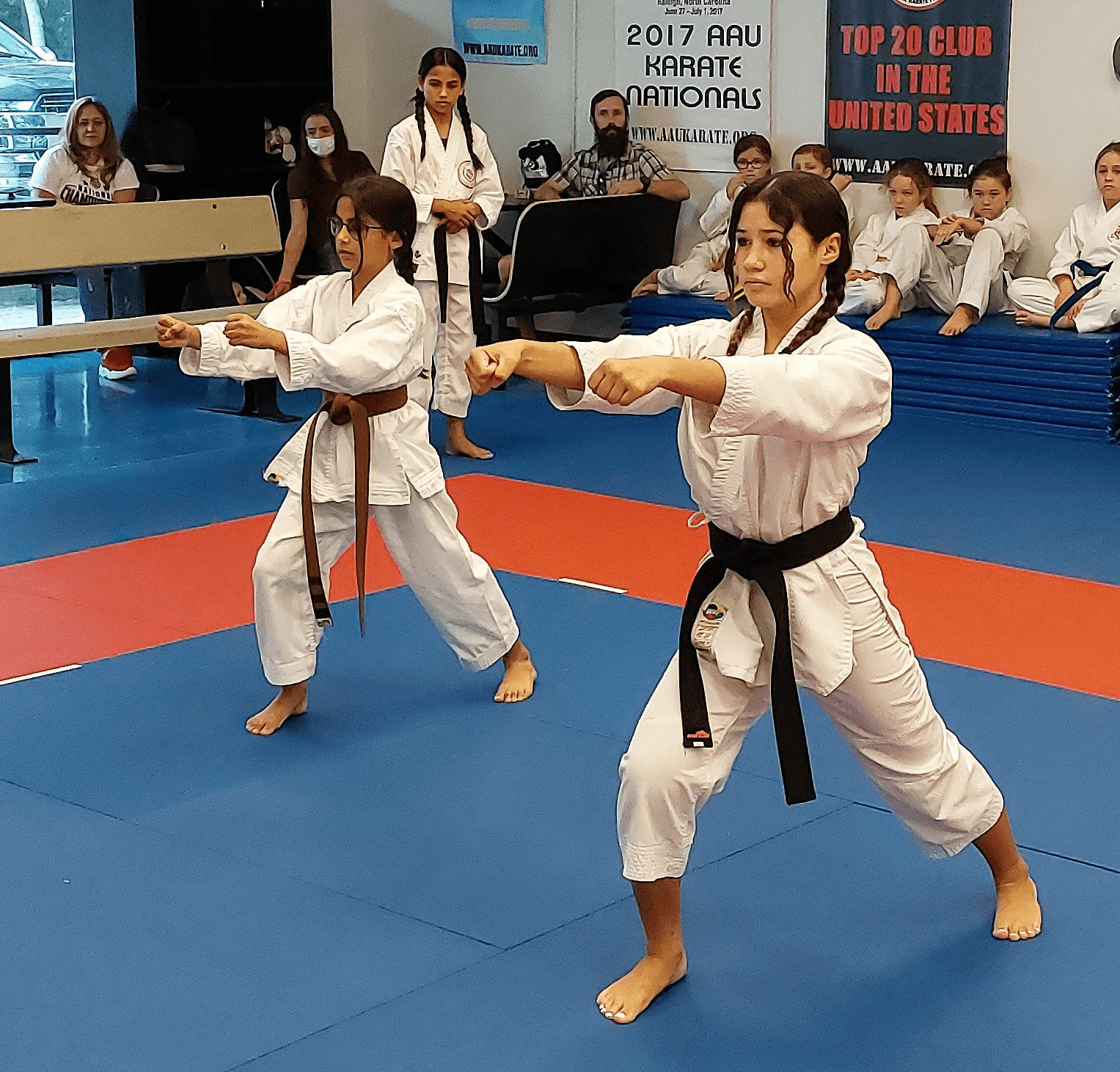
Confidence here does not come from a slogan on a wall. It comes from a child repeating a technique until it works, then testing that skill in front of the class at belt testing. Respect shows up in small ways first: standing in line, waiting a turn, listening for an instruction before moving. Listening skills and coordination build the same way they would on a sports team or in a school classroom like the ones at Pelican Island or Sebastian Elementary, through repetition and correction rather than a single pep talk. Instructors here think about child development in practical terms, not buzzwords, which is why a Pre-K class looks nothing like a youth class even though both build toward the same belt system. Parents who enroll through the family martial arts program often notice the same habits carrying over into homework time and everyday routines at home, things like following directions, sitting still, and paying attention, simply because the child has practiced them somewhere else first. That carryover is exactly what school readiness looks like in practice, not a worksheet skill but a behavior the child already owns before kindergarten asks for it.
Why Local Families Choose This Program
-
A full curriculum in one place, so a child does not need to switch schools as interests grow from karate into weapons or competition.
-
Thirty years of the same instructor teaching the same beginner curriculum, not a rotating set of assistants.
-
Belt rank tied to demonstrated skill, tested in front of the class, rather than handed out for time enrolled.
-
A family program that puts a parent on the mat instead of in a waiting room chair.
Getting Your Child Started
-
Reach out first. A call, an email, or the contact form sets up a first class for a Pre-K student, an older child, or the whole family.
-
Try a beginner class. Pre-K karate, youth martial arts, and the family program can all be watched or joined once before committing to anything.
-
Get fitted and pick a schedule. A uniform gets sized, and class times get chosen around school pickup and after-school routines.
-
Start working toward the first belt. Progress follows a real curriculum, tracked class by class rather than handed out automatically.
Areas We Serve
Although this page focuses on Sebastian, many students also travel from nearby communities including Vero Beach, Indian River County, Indian River Shores, North Beach, South Beach, Osceola Park, Beachland, Vero Beach South, and West Vero Corridor. Our flexible class schedule makes it convenient for families across the area to train together throughout the week.